Quality Holistic Learning Project: Building Teacher Capacity for Holistic, Inclusive Education
Through its Center for Professional Learning (CPL), Childhood Education International (CE International) led the Quality Holistic Learning (QHL) Project, supporting educators working in displacement, emergency, and refugee contexts. The initiative advanced inclusion, equity, and holistic learning for every child—particularly those who are displaced, marginalized, or otherwise vulnerable.
Collaborative, Educator-Centered Design
In partnership with local educators and global organizations, QHL Fellows and partners co-created competency-based professional learning materials that integrate social-emotional learning (SEL), psychosocial support (PSS), asset-based pedagogies, and differentiated instruction. Designed by educators, for educators, these materials strengthen classroom practice and enhance student well-being and learning outcomes.
All resources are freely available through CE International’s Open Educational Resource (OER) Library, which hosts professional development courses, handbooks, communities of practice, and micro-credentials in multiple languages.
Project Outcome and Goals
The QHL Project aimed to improve quality holistic learning outcomes—academic, social, and emotional alike—for children in crisis and displacement contexts by:
-
Building teachers’ competencies to design and deliver holistic, inclusive learning experiences;
-
Enabling greater knowledge exchange among educators, ministries, NGOs, and INGOs; and
-
Strengthening data-informed teaching, using assessment and learning analytics tools to guide continuous improvement.
The materials created by these QHL Project Fellows are all publicly available for free in our Open Educational Resource (OER) Library, along with additional resources that have been developed in Spanish, Kiswahili, and Ukrainian since the initial project period. We invite educators, other education leaders, INGO staff, and others to access and share these resources by taking courses, leading workshops with the materials, and/or earning micro-credentials.
Implementation and Reach
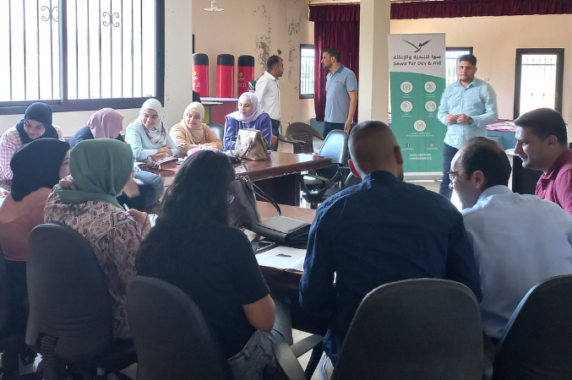
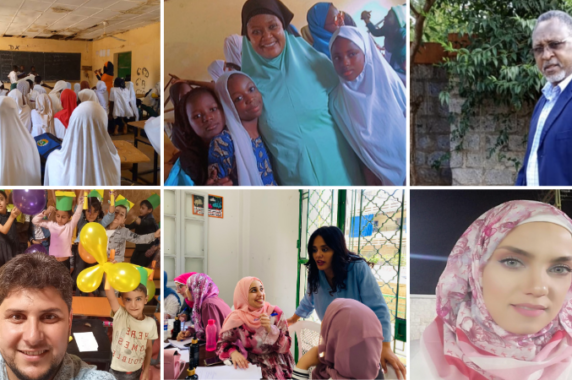
Between 2021–2023, the CPL worked with teams of teachers and education stakeholders in Lebanon, Kenya, and Niger to create, test, and refine professional learning materials in Arabic, English, and French. Subsequent work expanded to Ukraine and Lebanon, where CPL teams adapted and contextualized the materials for new learning environments.
The resources—spanning online and offline training modules, handbooks, micro-credentials, and analytics tools—support growth in online and blended learning, SEL and PSS, asset-based instruction, and differentiated pedagogy.
Impact and Evaluation
An external evaluation report from the first project phase found that the QHL resources had a significant impact on teaching practice—helping educators feel more prepared to engage refugee, displaced, and vulnerable learners. Teachers reported meaningful changes in classroom strategies and stronger relationships with students, resulting in more responsive and holistic learning environments.
Reflections from QHL Project Fellows also emphasize the positive impact of the project:
Professional Learning
Le projet AHQ m'a permis d'apprendre beaucoup de choses mais ce que je considère comme la chose la plus importante que j'ai apprise est la relation entre les émotions et la capacité à apprendre. [The QHL project allowed me to learn a lot of things but what I consider to be the most important thing I learned was the relationship between emotions and the ability to learn.]
Educator in Niger & QHL Project Fellow
Community-Building & Leadership
[We] are involved in decisions that are to take place. We are consulted and decide when and how our activities can be beneficial to all of us by giving some flexibility and accommodation of others' challenges to support one another with empathy. Strategies are put in place to treat every teacher with the esteem he/she deserves to feel a boost. We learn alone or in groups and work at our own pace to achieve our autonomy. We acquire many learning/teaching techniques with our learners, colleagues and fellows from daily routines, forums, weekly Zoom/class meetings, journaling, content sharing through teaching, games, Google applications, continuous communication by phone, WhatsApp, email and others. All these facilities help us become a friendly village of educators across the world.
Educator in Kakuma Refugee Camp in Kenya & QHL Project Fellow
Teacher-Centered
I feel that I was lucky to find the time, energy, and motivation to keep moving forward. However, I know that others are not as lucky. So, it is our job, fellows and leaders, to empower teachers and equip them with the needed skills. This is the aim behind developing tools and online courses. These have been developed by us, the teachers, for the teachers. Teachers who live in the same context of struggle as other teachers. The tools aim to fill in the gaps that we teachers see in our communities, classrooms, and ourselves. These gaps include knowledge in SEL and its importance for our students and self-care for teachers that we are not aware of. These are addressed by the tools as they provide experiences and examples from our classrooms, written using our words and catering to our needs as teachers and students.
Educator in Beirut, Lebanon & QHL Project Fellow/Consultant
A Model for Sustainable, Scalable Capacity Building

The QHL Project exemplifies CE International’s consulting approach to professional learning and quality assurance—co-creating scalable, multilingual, and data-informed systems that strengthen teacher capacity within national education frameworks.
By positioning teachers as self-directed learners and local leaders, CE International ensures that professional learning materials are both locally contextualized and globally adaptable—capable of supporting educators across diverse displacement and crisis contexts.
All QHL materials are publicly available through CE International’s Open Educational Resource Library for educators, ministries, and organizations seeking practical tools to deliver high-quality, inclusive, and holistic education for all children.
Quality Holistic Learning App
A prototype app was created during the earliest phase of the QHL Project. It assists teachers in their use of effective teaching methods and measurement of holistic learning outcomes. Our goal is to make the impact of teaching more visible to teachers while also attending to teacher learning and wellbeing.
The app guides teachers (both formally and non-formally trained) in displacement contexts in the assessment of, reflection on, and intervention in holistic learning, defined as both students’ academic achievement and their social and emotional learning (SEL) and psychosocial wellbeing.
If you would like more information on how to be part of a development and/or financing partnership for this app, please contact us.
 Read more
This is how we are supporting teachers around the world in 2021
Center for Learning in Practice Joins the International Teacher Task Force